Understanding Veterinary Telehealth Today
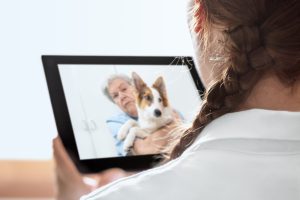
Veterinary practices are balancing more demands than ever, from busy schedules to evolving client expectations. Veterinary telehealth supports clinics as they adapt to these operational and clinical pressures. This approach uses secure digital tools to support clinical collaboration, case assessment, and client guidance outside the exam room. It includes sharing medical records, imaging studies, and patient updates, along with asynchronous discussions that help inform clinical decisions.
Veterinary telemedicine is a more specific subset that involves diagnosing or treating patients remotely when a valid veterinarian-client-patient relationship and applicable regulations allow. In everyday practice, telehealth supports continuity of care, informed triage, and collaborative decision-making without replacing hands-on examinations.
At AxisVet, our telehealth solutions provide timely diagnostic input, streamlined collaboration, and dependable specialist access that fits naturally into day-to-day practice operations.
Key Benefits Telehealth Brings to Veterinary Practices
When integrated thoughtfully, telehealth strengthens both patient care and operational performance. Clinics that adopt it as part of their workflow often experience meaningful improvements in efficiency, communication, and clinical confidence.
One of the most immediate benefits is faster case prioritization. Tools such as teletriage for pets allow teams to evaluate incoming concerns earlier, identify urgency, and allocate appointment slots more strategically. This helps reduce scheduling pressure while allowing urgent cases to move forward without delay.
Telehealth also reduces diagnostic bottlenecks. Digital case submission allows imaging studies and clinical data to move quickly from acquisition to interpretation. Instead of waiting for availability or transferring physical media, clinics can receive timely feedback that supports faster treatment planning and clearer next steps.
Continuity of care improves as well. Chronic condition management, post-treatment monitoring, and follow-up evaluations benefit from structured digital touchpoints that complement in-clinic visits. These touchpoints help veterinarians track trends, adjust care plans, and maintain consistency across longer treatment timelines.
Specialist collaboration is another major advantage. Reliable veterinary specialist access allows general practices to consult board-certified experts in radiology, cardiology, and internal medicine regardless of location. This access supports informed decision-making even when specialty staff are not available on site.
From an operational perspective, these advantages contribute directly to clinic workflow efficiency. Clear intake processes, standardized submissions, and predictable turnaround times reduce internal friction and allow staff to focus on patient care rather than administrative follow-up. Consistent client communication in telehealth further supports this efficiency by setting expectations around timelines, updates, and next steps.
When Veterinary Telehealth Makes the Biggest Impact
Telehealth delivers the most value when applied to appropriate clinical scenarios and guided by professional judgment. Understanding when digital collaboration supports outcomes – and when in-person care remains necessary – helps clinics use telehealth responsibly.
When used with clear boundaries, telehealth allows veterinary teams to act earlier, collaborate more effectively, and reduce uncertainty during critical decision points without disrupting established standards of care.
Telehealth is well suited for:
- Initial case review and urgency assessment through remote veterinary consultations, allowing clinicians to evaluate presenting concerns, review submitted history, and determine next steps before committing in-clinic resources.
- Follow-up discussions for stable patients or chronic conditions, supporting ongoing care plans, medication adjustments, and monitoring without requiring unnecessary clinic visits.
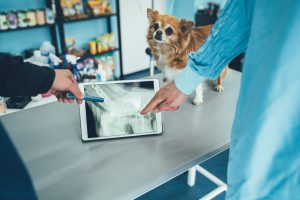
- Specialist interpretation of imaging and cardiac data using virtual diagnostic support, helping primary veterinarians validate findings and confirm diagnostic direction.
- Collaborative case discussions that support treatment planning, particularly for complex or atypical cases that benefit from multiple clinical perspectives.
- Advanced diagnostic imaging telehealth review conducted by board-certified experts, providing deeper insight into subtle findings that may influence case management.
Radiology and cardiology cases often benefit from this approach. Specialist interpretation helps refine diagnoses, reduce variability in interpretation, and support targeted treatment decisions. Telecardiology and teleradiology collaboration adds clinical perspective while keeping the primary veterinarian central to patient care, without shifting responsibility away from the clinic.
In-clinic care remains essential for:
- Physical examinations that rely on palpation, auscultation, or direct observation, where tactile and sensory assessment informs diagnosis.
- Emergency situations requiring immediate hands-on intervention and real-time monitoring.
- Surgical procedures and advanced diagnostics that require on-site equipment and direct patient management.
- Rapidly changing cases where immediate reassessment affects outcomes and treatment direction.
Telehealth works best as part of a balanced approach to care. The attending veterinarian continues to guide diagnosis, treatment decisions, and follow-up, with in-clinic visits playing an important part whenever hands-on evaluation is needed.
How to Integrate Telehealth Into Everyday Clinic Operations
Successful adoption depends on planning, communication, and team alignment. Clinics that treat telehealth as an integrated workflow component rather than a separate service tend to see stronger results, smoother case flow, and more consistent staff engagement.
- Align internal teams early. Staff training should cover appropriate use cases, documentation standards, and escalation pathways. When teams share a clear understanding of how telehealth fits into clinical care, workflows remain consistent across roles.
- Communicate clearly with clients. Transparent explanations help clients understand what a telehealth appointment includes, expected timelines, and follow-up steps. Clear guidance reduces confusion and supports informed participation in care decisions.
- Update intake and scheduling processes. Digital intake forms and structured case summaries help teams prepare efficiently, reduce back-and-forth communication, and support focused consultations.
- Standardize collaboration tools. Secure platforms for sharing records, images, and notes support consistent feedback from specialists – including access to AxisVet’s clinical radiology team – while protecting data integrity.
- Reinforce follow-up workflows. Clear documentation and guidance help clients understand how to use telehealth for pets as part of ongoing care, including when in-person visits remain necessary.
Educational resources also play an important role in helping clinics feel comfortable adopting telehealth. At AxisVet, we create practical, easy-to-understand content that answers common questions and supports everyday clinical decisions.
Check out our resources like our common misconceptions about veterinary telemedicine to help clarify how telehealth fits within regulatory and clinical boundaries. We also have articles on AI in veterinary teleradiology and the benefits of teleradiology for veterinary practices, which offer a closer look at how remote collaboration supports accurate interpretation and efficient workflows.
Bringing Veterinary Telehealth into the Future
Telehealth continues to shape how clinics balance patient care with operational demands, supporting smarter collaboration and more efficient workflows. By integrating remote expertise into daily practice, teams strengthen diagnostic capabilities while delivering reliable virtual pet care experiences.
AxisVet partners with veterinary clinics to deliver fast, dependable specialist insight that helps teams move cases forward without adding complexity to daily operations. We support workflows through our teleradiology services, telecardiology support, Holter monitoring services, and more. Our goal is to make it easier for clinics to manage complex cases with greater consistency.
To take the next step, learn more about AxisVet’s teleradiology services and how our specialists support efficient, informed clinical decisions.