Veterinary Teleradiology Services for Clinics and Hospitals
Fast, accurate imaging interpretations from board-certified radiologists to support your veterinary practice.
Comprehensive Veterinary Teleradiology Solutions
At AxisVet, we deliver advanced veterinary teleradiology designed to help clinics and hospitals make confident, timely decisions. Our approach combines high-quality imaging analysis with dependable turnaround, so veterinary teams can focus on patient care instead of waiting for results.
We provide complete coverage across modalities, including radiographs, ultrasound, fluoroscopy, and CT and MRI veterinary imaging. Each case is reviewed by board-certified radiologists, and reports are tailored to the needs of the submitting veterinarian.
Our services integrate smoothly with clinic workflows, supporting efficiency for decision-makers. From radiograph interpretation for everyday use to specialized imaging reviews, our team supports general practices, specialty hospitals, and academic institutions with equal reliability.
By offering diagnostic imaging for vets that is accurate and fast, we help veterinary teams meet the demands of modern patient care. For a broader look at how remote solutions impact clinics, explore our resource on the benefits of veterinary teleradiology.
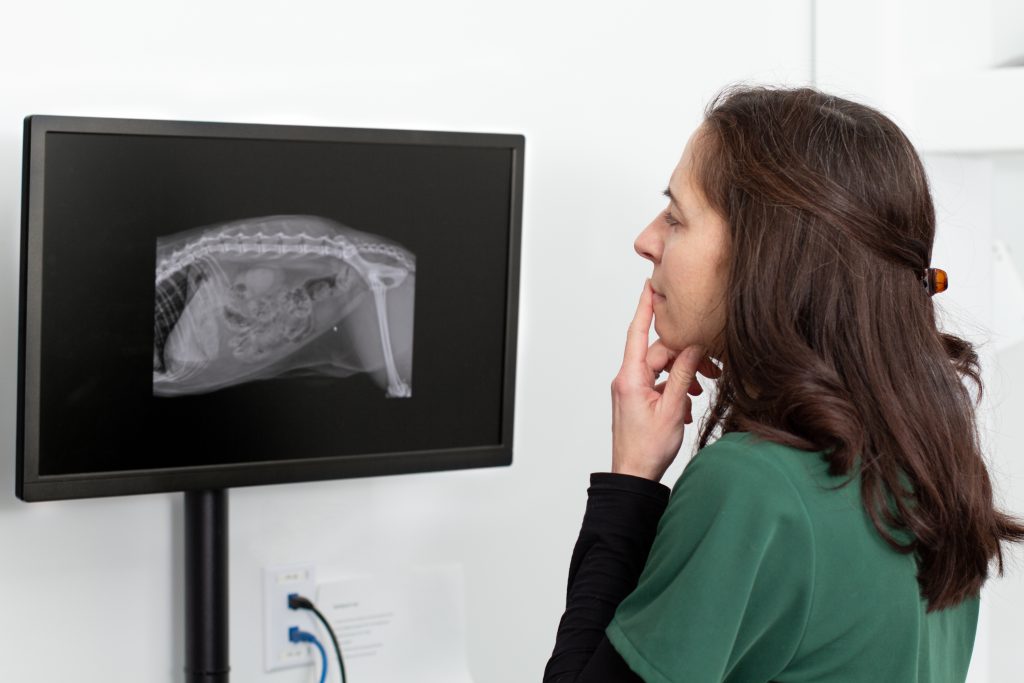
Remote access to specialist interpretation can extend a practice’s diagnostic capabilities without requiring a radiologist to be on-site. General practices may use teleradiology for routine studies or cases that warrant additional imaging expertise, while specialty hospitals can rely on remote support for advanced studies and higher case volumes. Across these settings, AxisVet provides access to experienced radiologists who understand the clinical questions behind both everyday and complex imaging cases.
Fast Turnaround Radiology Reports
Every case requires timely results, and our service is structured to deliver. Standard veterinary imaging reports are provided within hours, while STAT radiology reports for urgent situations are available in under an hour. This speed is crucial for clinics that need answers quickly – supporting anesthetic clearances, emergency decisions, and rapid treatment adjustments.
By providing fast turnaround radiology, we help reduce the pressure on staff and builds client trust through responsiveness. Both general practices and specialty hospitals benefit from having urgent results available without referral delays. The ability to access interpretations the same day allows clinics to move forward confidently, improving outcomes while giving owners peace of mind.
Rapid access to results also helps streamline scheduling for follow-up procedures and treatments. Clinics can plan anesthesia, surgeries, and discharge instructions with confidence, avoiding costly delays. For specialty hospitals, this efficiency translates into smoother coordination across departments, while smaller practices benefit from maintaining a consistent caseload without overwhelming staff.
Our goal is to remove bottlenecks in the diagnostic process, helping veterinary teams operate with greater flexibility and deliver timely care that supports both patients and owners.
What to Expect From a Veterinary Teleradiology Report
A useful teleradiology report does more than identify abnormalities on an imaging study. It gives the submitting veterinarian a clear interpretation of the findings within the context of the patient’s clinical history, helping connect what is visible on the images with the questions that prompted the study.
AxisVet’s board-certified veterinary radiologists review each case with the goal of providing clear, clinically relevant information that veterinarians can apply to patient care. Depending on the findings, reports may also include recommendations for additional imaging, diagnostics, monitoring, or specialist evaluation when appropriate.
Clinical Context and Imaging Findings
Relevant clinical history gives the radiologist important context when evaluating an imaging study. Information such as the presenting complaint, relevant examination findings or diagnostic results, and the reason for the study can help focus the interpretation on the clinical questions the veterinary team is working to answer.
The resulting report communicates significant imaging findings and helps the veterinarian understand their potential relevance to the case. This combination of imaging expertise and clinical context makes the report a practical part of the broader diagnostic process rather than an isolated interpretation.
Clear Findings and Recommendations
Clear communication is particularly important when imaging findings may influence the next stage of a patient’s workup. A veterinary teleradiology report can summarize significant findings and provide an overall impression that helps the submitting veterinarian evaluate the case.
When appropriate, recommendations may identify additional imaging, diagnostics, monitoring, or specialist input that could provide further information. These insights are intended to support the veterinarian managing the patient, providing specialist perspective that can be considered alongside the physical examination, laboratory results, medical history, and other clinical information.
When Veterinary Practices Use Teleradiology Support
Teleradiology can support veterinary teams in a range of situations, from interpreting challenging cases to providing additional reading capacity when imaging volume increases.
This flexibility allows teleradiology to fit into different practice environments. A general practice can gain access to board-certified radiologists without having a specialist on-site, while specialty and high-volume hospitals can use remote interpretation to supplement their existing diagnostic imaging resources.
Routine and Complex Imaging Cases
Not every imaging study presents the same level of complexity. Veterinary practices may seek specialist interpretation for routine studies as part of their normal diagnostic process or when findings are difficult, unexpected, or require additional expertise.
Advanced diagnostic imaging can create another need for specialist review. CT and MRI studies, for example, generate detailed cross-sectional images that benefit from interpretation by radiologists experienced with these modalities. Remote access to that expertise allows practices to incorporate advanced imaging into patient care while obtaining specialist interpretation of the resulting studies.
Teleradiology can also be valuable when an imaging study raises questions that extend beyond the initial clinical impression. In these cases, an experienced veterinary radiologist can provide another layer of diagnostic insight while the veterinarian retains responsibility for evaluating the patient as a whole.
Overflow and Coverage Support
Teleradiology can also provide additional reading capacity when a practice’s imaging needs exceed its available internal resources. Specialty hospitals and larger veterinary organizations may already have an in-house radiologist or diagnostic imaging team but encounter periods when case volume exceeds normal capacity.
Remote radiology can supplement those resources during temporary increases in imaging volume or gaps in radiologist availability. Instead of allowing studies to accumulate while internal resources catch up, practices can use outside specialist support to help keep cases moving through the diagnostic process.
This model makes teleradiology useful even for practices that already have significant imaging expertise in-house. Rather than replacing existing specialists, remote radiologists can complement the veterinary team and provide additional capacity when it is needed.
Expertise from Board-Certified Veterinary Radiologists
Our strength lies in the depth of our team. All reports are prepared by board-certified veterinary radiologists, giving practices confidence that every interpretation is grounded in ACVR-certified expertise.
The team’s skill spans all major imaging modalities, from ultrasound imaging to complex CT and MRI studies. We also provide context and recommendations to help veterinarians apply findings effectively. This collaborative approach means clinics gain more than just a report – they gain expert insight to support their medical decisions.
By working directly with radiologists who understand both routine and advanced cases, practices can feel supported in every aspect of their diagnostic process.
Getting More Value From Your Imaging Submission
Teleradiology works best as a collaboration between the veterinarian managing the patient and the radiologist interpreting the images. The imaging study provides essential visual information, while the submitting veterinarian can provide the clinical context that helps the radiologist understand the reason for the study and the questions the veterinary team is trying to answer.
Providing a complete submission can help the radiologist evaluate the study within that broader clinical picture.
Provide Relevant Clinical History
Relevant patient history can give the radiologist important context before reviewing an imaging study. Consider including the presenting complaint, pertinent medical history, physical examination findings, relevant diagnostic results, and the clinical reason the study was performed.
Specific clinical questions can also help focus the interpretation. When the radiologist understands what the veterinary team is evaluating, the report can address the imaging findings with that concern in mind.
The goal is not to provide every detail in the patient’s record. Instead, include the information that is most relevant to the imaging study and the current diagnostic process.
Submit Complete, High-Quality Imaging Studies
Clear, high-quality images and a complete imaging study are important for diagnostic interpretation. Appropriate positioning and a complete imaging study give the radiologist the information needed to evaluate the area of concern and identify relevant findings.
When submitting a case for remote interpretation, practices should ensure that the study contains the necessary images and that image quality is sufficient for evaluation. This helps the radiologist make the most of the available diagnostic information and provide a useful interpretation to the veterinary team.
Include Prior Imaging When Relevant
When previous imaging is available and appropriate for comparison, it can provide valuable context for understanding how findings have changed over time. Comparing current and prior studies may help a radiologist evaluate whether an abnormality is new, stable, improving, or progressing.
Prior imaging can be particularly useful when monitoring an established condition or evaluating response to treatment. If AxisVet accepts previous studies for comparison, including relevant prior imaging with the current submission can give the interpreting radiologist additional information for assessing the case.
Direct Access When a Case Needs More Discussion
A written report may answer the primary imaging questions, but some cases benefit from additional discussion. AxisVet’s direct access to radiologists gives veterinary teams an opportunity to communicate about findings when clarification or additional context is needed.
Follow-up communication can be particularly useful when imaging findings influence the next stage of a diagnostic workup. A veterinarian may want clarification about the significance of a finding, additional context around a recommendation, or a better understanding of how the radiologist interpreted a particular feature of the study.
This accessibility reinforces the collaborative role of veterinary teleradiology. The radiologist contributes specialized imaging expertise, while the veterinarian combines that information with the patient’s history, examination findings, laboratory results, and overall clinical presentation.
It also reflects AxisVet’s Human Tech approach. Technology makes remote diagnostic support efficient and accessible, but veterinarians are not left dependent on a report or software alone. Responsive human expertise remains part of the relationship.
Why Veterinary Practices Choose AxisVet
- Board-Certified = Accuracy & reliability Every report is reviewed by credentialed specialists with years of experience.
- Experienced = Routine & complex cases From simple screenings to advanced cross-sectional studies, our team provides detailed evaluations tailored to each patient.
- Accessible = Direct communication Radiologists are available to discuss findings, supporting collaboration with your veterinary team.
- Human Tech = Personalized service We combine efficient systems with responsive human support, never leaving clinics dependent on software alone.
Frequently Asked Questions About Veterinary Teleradiology
What information should I include with an imaging submission?
Include clinical information relevant to the imaging study, such as the patient’s presenting complaint, medical history, examination or diagnostic findings, and the reason for the study. Providing specific clinical questions can also give the radiologist useful context when interpreting the images.
Can teleradiology support a practice that already has an in-house radiologist?
Yes. Teleradiology can complement an existing radiologist or diagnostic imaging team by providing additional reading capacity when imaging volume increases or internal resources are limited. This allows remote specialists to supplement existing expertise rather than replace it.
Can I communicate with a radiologist after receiving my report?
AxisVet emphasizes direct access to its radiologists as part of its veterinary teleradiology service. Follow-up communication gives veterinarians an opportunity to discuss findings and seek clarification when additional context around an interpretation or recommendation is needed.
Does veterinary teleradiology replace my team’s clinical judgment?
No. Veterinary teleradiology provides specialist imaging interpretation to support the veterinarian managing the patient. The radiologist’s findings and recommendations can be considered alongside the patient’s history, physical examination, laboratory results, and other clinical information when making diagnostic and treatment decisions.
Can previous imaging studies be submitted for comparison?
Previous imaging can provide useful context when evaluating changes over time, including disease progression or response to treatment. Confirm with AxisVet whether prior studies can be submitted with a current case for comparison.
How do I get started with AxisVet veterinary teleradiology services?
Contact AxisVet to discuss your practice’s imaging needs and learn more about getting started with veterinary teleradiology services. AxisVet supports general practices, specialty hospitals, and other veterinary organizations with access to board-certified radiology expertise.
Partner with AxisVet for Veterinary Teleradiology
Over the years, we’ve become a trusted resource for practices that demand quality, speed, and integration. With our remote radiology services, clinics receive the same level of expertise as a referral hospital – without disrupting workflow.
Our solutions also complement other specialties, including telecardiology services, Holter monitoring solutions, echocardiography services, and veterinary internal medicine consultations. Built for modern telemedicine for veterinary practices, our teleradiology service helps you deliver exceptional care with confidence.